Energy Efficiency Archives - Carr Air Conditioning Energy Efficiency Archives - Carr Air Conditioning

Category: Energy Efficiency

  • What Is a Duke Energy Blower Door Test?

    What Is a Duke Energy Blower Door Test and Why Does It Matter?

    If your home feels harder to cool than it should, or your energy bills keep rising without a clear explanation, the issue may not be your air conditioner alone.

    For many homeowners in Clearwater, Dunedin, and across Pinellas County, comfort problems are often tied to how well the home holds conditioned air. Even a strong HVAC system can struggle if cooled air escapes through gaps, leaks, or weak spots in the home.

    That is where a blower door test can help.

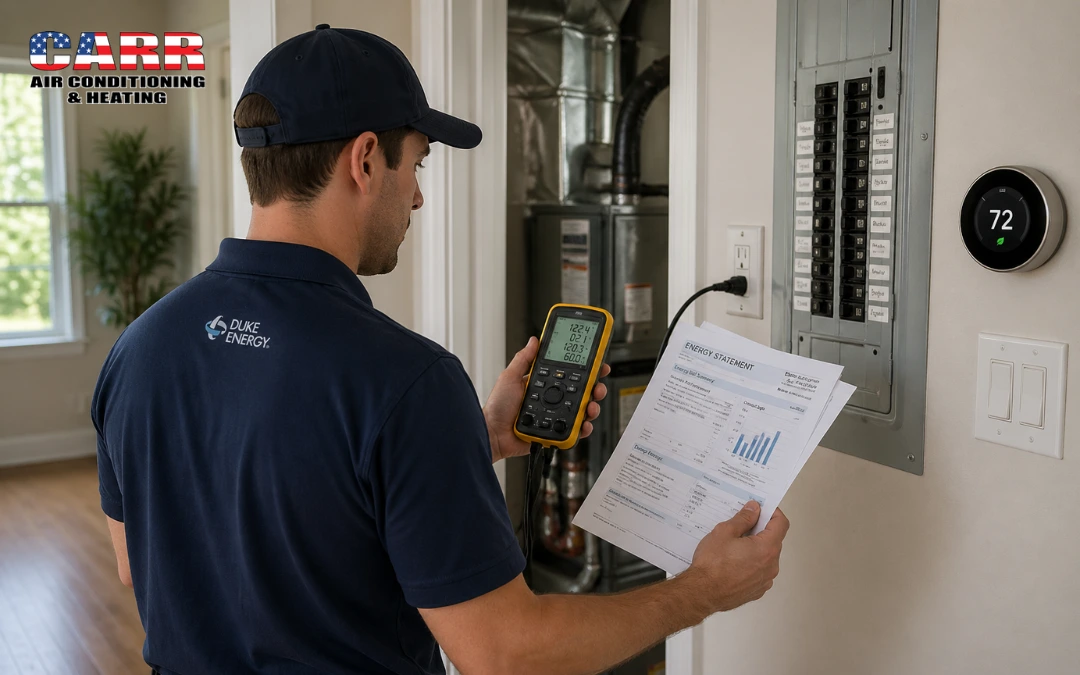
    A blower door test is commonly used during professional energy assessments to measure how airtight a home is. Duke Energy offers residential energy assessment options in Florida, including its free Home Energy Check, and also describes a blower door test as part of its Home Energy House Call Plus service to help pinpoint air leaks.

    What Is a Blower Door Test?

    A blower door test is a diagnostic test that helps identify air leakage in a home.

    During the test, a powerful fan is temporarily installed in an exterior doorway. The fan changes the pressure inside the home, which makes it easier to find areas where outside air is leaking in or conditioned air is escaping out.

    The U.S. Department of Energy explains that professional energy assessors use blower door testing to determine a home’s airtightness and identify air leakage that can affect energy use and comfort.

    In simple terms, the test helps answer an important question:

    How much air is your home losing?

    For Florida homeowners, that matters because every bit of cooled air that escapes has to be replaced. Your HVAC system then has to work longer and harder to keep the home comfortable.

    Why Air Leaks Matter in Florida Homes

    Air leaks are a problem in any climate, but they are especially important in Florida.

    Homes in Pinellas County deal with heat, humidity, and long cooling seasons. When outside air enters the home, your AC system has to cool that air and remove moisture from it. That creates extra work for the system and can make the home feel less comfortable.

    Air leakage can show up in several ways. Some homeowners notice warm rooms, humidity issues, or higher electric bills. Others feel like their AC runs all day but never quite gets the home comfortable.

    In many cases, the HVAC system is only part of the story. The home itself may be allowing too much air to move in and out.

    How Air Leaks Affect Your HVAC System

    Your air conditioning system is designed to cool the air inside your home. When air leaks are present, that job becomes much harder.

    Cooled air may escape into the attic, garage, or outside. At the same time, hot and humid outdoor air may enter through gaps around windows, doors, attic openings, recessed lights, plumbing penetrations, or other weak points.

    This creates a cycle where the HVAC system keeps working, but the home keeps losing comfort.

    Over time, that can lead to longer run times, higher energy use, uneven temperatures, and added wear on the equipment. Even if the system is properly sized and maintained, air leaks can make it seem like the AC is not performing well.

    What Homeowners Learn From a Duke Energy Blower Door Test

    The value of a blower door test is that it helps make hidden problems visible.

    Instead of guessing where air is escaping, the test helps identify areas that may need attention. That gives homeowners a clearer understanding of why their home feels uncomfortable or inefficient.

    For example, a homeowner may assume they need a larger AC system because the house feels warm. But after testing, the bigger issue may be air leakage or poor sealing. In that case, improving the home’s envelope may help the existing HVAC system perform better.

    This is one reason energy audits can be helpful before making major comfort or efficiency decisions.

    The Connection Between Blower Door Testing and High Energy Bills

    High energy bills are one of the main reasons homeowners start looking into energy audits.

    If your electric bill keeps rising, it is easy to blame the AC system right away. Sometimes that is correct. Dirty coils, low refrigerant, poor airflow, aging equipment, and drainage issues can all increase energy use.

    But if the home is leaking air, the system may be fighting a problem it cannot solve on its own.

    A blower door test helps separate HVAC performance issues from home envelope issues. That distinction matters because the right solution depends on the actual cause.

    Why This Matters in Clearwater, Dunedin, and Pinellas County

    Many homes in Clearwater, Dunedin, and nearby communities were built or remodeled over different periods of time. Some homes have older ductwork, attic spaces, room additions, window changes, or building gaps that affect how well the home holds conditioned air.

    Florida homes also face high humidity, which makes air leakage more than just a temperature issue.

    When humid outdoor air enters the home, it can make indoor air feel sticky even when the thermostat says the temperature is low. That often causes homeowners to lower the thermostat, which increases energy usage without fully solving the comfort problem.

    A blower door test can help identify whether uncontrolled air leakage is part of the issue.

    How This Supports Better HVAC Decisions

    A blower door test does not replace HVAC service. It complements it.

    HVAC maintenance helps ensure your system is operating properly. A blower door test helps show whether the home is making that system work harder than necessary.

    Together, those insights can help homeowners make smarter decisions. Instead of guessing, you can better understand whether the issue is related to equipment performance, airflow, ductwork, insulation, air sealing, or a combination of factors.

    That can prevent unnecessary repairs, premature replacement decisions, or repeated comfort problems that never get fully resolved.

    Why Working With a Local HVAC Professional Helps

    After an energy audit or blower door test, many homeowners are left wondering what to do next.

    The report may identify air leaks, duct concerns, or efficiency opportunities, but the next step is understanding which items matter most for comfort and HVAC performance.

    That is where working with a local HVAC contractor can help.

    A contractor familiar with Florida homes can review how the audit findings relate to your AC system, ductwork, airflow, humidity control, and overall comfort. For Carr Air Conditioning customers, this is especially relevant because Carr works with Duke Energy as part of the program and understands how energy efficiency improvements connect back to HVAC performance.

    The Bottom Line

    A Duke Energy blower door test can be a valuable tool for Florida homeowners who want to better understand comfort issues, high energy bills, and air leakage.

    It helps identify where conditioned air may be escaping and where hot, humid outdoor air may be entering the home. In a climate like Pinellas County, that can have a major impact on how hard your HVAC system has to work.

    If your home feels uncomfortable, your AC runs constantly, or your energy bills seem higher than they should be, a blower door test can provide useful answers.

    From there, the right HVAC guidance can help turn those findings into practical next steps for better comfort, efficiency, and long-term system performance.
  • Why Is My Energy Bill So High in Florida?

    If you live in Clearwater, Dunedin, or anywhere in Pinellas County, you’ve probably had at least one month where your energy bill made you stop and look twice.

    In Florida, higher electric bills are common, especially as temperatures rise. But that doesn’t mean every increase is normal or unavoidable. Many homeowners assume their bill is high simply because “it’s hot outside,” but the real cause is often more specific.

    Your HVAC system, ductwork, insulation, thermostat settings, airflow, and humidity levels all play a role in how much energy your home uses. When one part of that system is not working efficiently, your AC has to work harder to keep the home comfortable.

    Over time, that extra strain shows up on your monthly bill.

    Why Florida Energy Bills Rise So Quickly

    Florida homes face a unique challenge. Air conditioners here do more than cool the air. They also remove moisture from the home.

    That matters because humidity makes your home feel warmer than the actual temperature. When indoor humidity is high, homeowners often lower the thermostat to feel more comfortable. The system then runs longer, uses more energy, and still may not solve the comfort issue completely.

    In Pinellas County, this becomes especially noticeable in spring and summer. Once the weather shifts, your AC may go from running occasionally to running most of the day. If the system is clean, properly maintained, and moving air well, that increase may be manageable. If there are underlying problems, your bill can climb quickly.

    Your HVAC System Is Often the Biggest Factor

    For most Florida homeowners, the HVAC system is one of the largest energy users in the home. That means even small efficiency problems can have a noticeable impact.

    An older system may need more time and energy to cool the same space. A poorly maintained system may run longer than necessary. Dirty coils, restricted airflow, clogged filters, low refrigerant, and worn components can all cause the system to work harder.

    The frustrating part is that the system may still appear to be working. Cool air may still come out of the vents. The home may still reach the temperature on the thermostat. But if it takes longer to get there, or the system has to run constantly to maintain it, energy use goes up.

    That is why high energy bills are often an early sign that something in the HVAC system needs attention.

    Dirty Filters and Poor Airflow Can Cost More Than You Think

    Airflow is one of the most overlooked causes of high energy bills.

    When air cannot move freely through the system, your AC has to work harder to push conditioned air through the home. A dirty air filter is one of the simplest examples. As the filter becomes clogged, airflow becomes restricted. The system has to run longer, comfort becomes less consistent, and energy use increases.

    Blocked vents, closed interior doors, dirty coils, and duct restrictions can create similar problems.

    In homes throughout Clearwater and Dunedin, airflow issues are especially common because many homes have been remodeled, expanded, or updated over time. The HVAC system may not always be perfectly balanced for how the home is used today.

    When airflow is off, some rooms may feel comfortable while others stay warm or humid. That often leads homeowners to lower the thermostat, which increases energy use even more.

    Duct Leaks Can Waste Conditioned Air

    Your ductwork plays a major role in energy efficiency. Even if your AC system is running properly, leaky ducts can waste a large amount of cooled air before it ever reaches your living space.

    This is especially important in Florida homes where ducts often run through attics, garages, or other hot areas. If conditioned air escapes into those spaces, the system has to work harder to cool the home.

    Many homeowners never see the duct problem directly. They just notice higher bills, uneven cooling, or rooms that never feel quite right.

    Duct leakage can also pull in hot, humid air from outside the conditioned space. That makes the AC work even harder because now it has to cool and dehumidify extra air that should not be entering the system in the first place.

    Poor Insulation and Air Leaks Add to the Problem

    High energy bills are not always caused by the HVAC system alone. Sometimes the home itself is losing cooled air too quickly.

    Air leaks around doors, windows, attic spaces, recessed lighting, and other openings allow conditioned air to escape and warm air to enter. Poor insulation can make the problem worse, especially during long stretches of hot weather.

    When this happens, your AC may be doing its job, but the home cannot hold the comfort it creates. The system cycles more often, runs longer, and uses more electricity.

    This is where energy audits, including programs like the Duke Energy audit, can be helpful. They can identify areas where the home may be losing energy and help homeowners better understand what improvements may make the biggest difference.

    Humidity Makes Your AC Work Harder

    Humidity is one of the biggest reasons Florida energy bills can feel unpredictable.

    When humidity levels are high, your AC has to remove moisture from the air before the home feels comfortable. If the system is oversized, poorly maintained, or not running properly, it may cool the home without removing enough humidity.

    That creates a frustrating situation. The thermostat says the home is cool, but the air still feels sticky or uncomfortable. Many homeowners respond by lowering the thermostat a few degrees.

    That may help temporarily, but it also increases energy use.

    Proper HVAC maintenance helps the system cool and dehumidify more effectively. When the system is clean, draining properly, and moving air correctly, it can do a better job controlling both temperature and moisture.

    Thermostat Habits Can Drive Bills Up

    Your thermostat settings also play a role in monthly energy costs.

    In Florida, constantly lowering the thermostat during hot afternoons can cause the system to run for long periods. Large temperature swings are especially inefficient because the AC has to work harder to catch up.

    A consistent setting usually works better than frequent manual adjustments. Smart thermostats can also help, but only if they are programmed correctly and paired with a system that is working efficiently.

    If your thermostat is old, inaccurate, or placed in a poor location, it may not read the home’s temperature correctly. That can cause the system to run too long or shut off before the whole home is comfortable.

    Drain Line Issues Can Affect Performance Too

    Drain line problems are another Florida-specific issue that can affect comfort and system reliability.

    As your AC removes humidity from the air, that moisture drains through the condensate line. When the line starts to clog, the system may shut down or struggle to manage moisture properly.

    Even before a full clog happens, drainage issues can contribute to inconsistent performance. In a humid climate like Pinellas County, keeping the drain line clear is an important part of protecting the system and maintaining comfort.

    This is one reason spring maintenance is so valuable. It gives homeowners a chance to catch drainage issues before peak cooling season.

    When a High Energy Bill Means You Should Schedule Service

    A single high bill does not always mean something is wrong. Weather changes, usage patterns, and utility rates can all affect monthly costs.

    But if your bill keeps rising and your comfort is not improving, it is worth taking a closer look.

    You should consider an HVAC inspection if your system runs constantly, rooms feel uneven, humidity feels high, or your home takes longer than usual to cool down. These are signs that the system may be working harder than it should.

    For homeowners in Clearwater, Dunedin, and throughout Pinellas County, catching these issues early can help prevent bigger repairs later.

    The Bottom Line

    High energy bills in Florida are common, but they should not be ignored.

    Your HVAC system is at the center of home comfort and energy use. When airflow, ductwork, insulation, humidity control, or maintenance are off, the system has to work harder. That extra work often shows up as higher monthly bills.

    The good news is that many of these issues can be identified and corrected before they become major problems.

    If your energy bill has increased and your home still does not feel as comfortable as it should, a professional HVAC evaluation can help pinpoint what is happening and give you a clearer path forward.

  • What Is the Duke Energy Home Energy Audit Program (and How It Helps Florida Homeowners)

    What Is the Duke Energy Home Energy Audit Program (and How It Helps Florida Homeowners)

    Rising energy bills are a common concern for homeowners in Clearwater, Dunedin, and across Pinellas County — especially as air conditioning use increases throughout the year.

    Many homeowners assume higher costs are just part of living in Florida, but in reality, there are often specific inefficiencies inside the home that can be identified and improved. This is where the Duke Energy Home Energy Audit Program can help by providing a clearer understanding of how energy is being used.

    If you’re already experiencing system inefficiencies, exploring professional AC repair services can help identify performance issues early.

    What the Duke Energy Audit Program Is

    The Duke Energy Home Energy Audit Program is designed to help homeowners understand how their home is using energy and where improvements can be made.

    Instead of guessing why energy bills are increasing, the audit provides a clearer picture of where energy is being lost, how efficiently your HVAC system is operating, and what areas of the home could be improved.

    As part of this process, certified advisors evaluate insulation, air leaks, and overall system performance to identify inefficiencies that may be driving up energy costs.

    Homeowners can also explore the program directly to understand how it works and what to expect.

    Why This Matters in Florida Homes

    Homes in Pinellas County face a unique challenge: high heat combined with high humidity. This means HVAC systems don’t just cool — they also work continuously to remove moisture from the air.

    Because of this, even small inefficiencies can have a noticeable impact on both comfort and energy costs.

    Issues like poor airflow, duct leakage, or insulation gaps often go unnoticed until they’re identified during an audit.This is where the Duke Energy Home Energy Audit Program becomes especially valuable for Florida homeowners.

    What Homeowners Learn From an Energy Audit

    An energy audit gives homeowners a better understanding of how their home performs as a system.

    Instead of focusing on just one component, it looks at how everything works together — from HVAC equipment to airflow, insulation, and overall energy usage.

    Many homeowners are surprised to learn that discomfort or high bills aren’t always caused by the HVAC system itself, but by how the home supports (or limits) its performance.

    Common Findings in Pinellas County Homes

    In homes throughout Clearwater and Dunedin, energy audits often uncover similar patterns.

    Airflow issues are one of the most common. Even when a system is working properly, uneven airflow can make certain areas of the home harder to cool, which leads to longer run times and higher energy use.

    Duct leakage is another frequent issue. When conditioned air escapes before reaching living spaces, the system has to work harder to maintain the desired temperature.

    Insulation also plays a role. Homes that allow cooled air to escape or warm air to enter will naturally require more energy to stay comfortable.

    How HVAC Performance Ties Into Energy Efficiency

    Your HVAC system is one of the largest contributors to your home’s energy usage.

    When everything is working efficiently, the system can maintain comfort without excessive run times. When something is off — even slightly — the system compensates by running longer and using more energy.

    An energy audit helps connect those dots, showing how airflow, insulation, and system performance all impact one another.The Duke Energy Home Energy Audit Program helps connect HVAC performance with overall energy efficiency.

    Why Working With a Participating Contractor Matters

    While the audit itself provides valuable insights, knowing what to do next is just as important.

    Working with a contractor who participates in the Duke Energy program helps ensure that any recommended improvements are properly evaluated and implemented.

    This gives homeowners a clearer path from understanding the problem to actually improving their home’s performance.

    When an Energy Audit Makes the Most Sense

    Energy audits are especially helpful for homeowners who:

    • Have noticed rising energy bills without a clear reason
    • Experience uneven temperatures throughout the home
    • Feel like their system runs constantly during warmer months
    • Want to improve overall comfort and efficiency

    In Florida homes, these issues are common and often tied to underlying inefficiencies that an audit can uncover.

    A Smarter Way to Approach Home Comfort

    Rather than guessing or replacing equipment prematurely, an energy audit takes a more thoughtful approach.

    It focuses on understanding how the home performs as a whole and identifying opportunities to improve efficiency without unnecessary changes.

    For many homeowners in Pinellas County, this leads to better comfort, lower energy usage, and more confidence in how their system is operating.


    Frequently Asked Questions

    Q1: What is the Duke Energy Home Energy Audit Program?
    Ans: The Duke Energy Home Energy Audit Program is a free evaluation that helps homeowners understand how their home uses energy and where improvements can be made to increase efficiency and reduce utility costs.

    Q2: How does the Duke Energy Home Energy Audit Program help lower energy bills?
    Ans: The program identifies inefficiencies such as air leaks, poor insulation, and HVAC performance issues that may be causing higher energy usage, allowing homeowners to make targeted improvements.

    Q3: When should I consider scheduling an energy audit?
    Ans: It’s a good idea to schedule an energy audit if you notice rising energy bills, uneven temperatures, or your HVAC system running more frequently than usual.

    Q4: Can HVAC system issues affect energy efficiency in my home?
    Ans: Yes, HVAC systems play a major role in energy usage. Problems like poor airflow, duct leaks, or system inefficiencies can significantly increase energy consumption over time.

    The Bottom Line

    The Duke Energy Home Energy Audit Program gives homeowners a clearer understanding of how their home uses energy and where improvements can be made.

    In Florida’s climate, where HVAC systems run frequently, that insight can make a meaningful difference in both comfort and efficiency.

    For homeowners looking to improve long-term performance and energy efficiency, working with a trusted local provider like Carr Air Conditioning can help ensure your system stays efficient and reliable year-round.