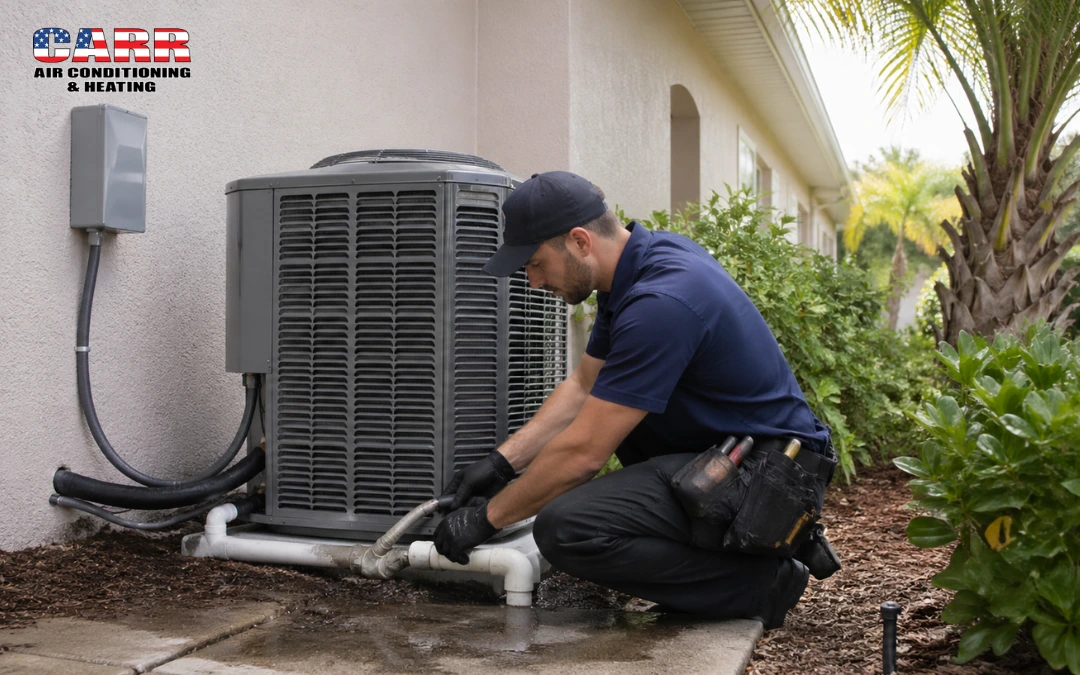
As temperatures and humidity start rising across Clearwater, Dunedin, and throughout Pinellas County, your air conditioning system begins working harder to keep your home cool and comfortable. During this time, problems like an HVAC drain lines clog in Florida can begin forming due to constant moisture buildup inside the system.
What many homeowners don’t realize is that along with cooling the air, your HVAC system is also removing large amounts of moisture from it. That moisture has to go somewhere — and it exits your system through the condensate drain line.
When that drain line becomes clogged, it can quickly turn into one of the most common and frustrating HVAC issues Florida homeowners face.
What an HVAC Drain Line Actually Does
Every time your AC runs, it pulls humidity out of the air. That moisture condenses into water and drains away through a small pipe connected to your system.
In Florida’s humid climate, this process happens constantly during spring and summer. Over time, that warm, damp environment inside the drain line creates the perfect conditions for buildup.
Without regular maintenance, the line can become partially or fully blocked.
Why HVAC Drain Line Clogs Happen So Easily in Florida
Drain line clogs are especially common in Pinellas County because of the combination of heat, humidity, and frequent AC use.
Inside the line, you can get buildup from:
- Algae and organic growth
- Dust and debris from the air
- Sludge formed from moisture and contaminants
Because the system is removing moisture daily, the drain line stays damp — which allows this buildup to grow over time.
Early Signs Your Drain Line May Be Clogging
Most drain line problems don’t happen all at once. They usually start small and gradually get worse.
Homeowners in Clearwater and Dunedin may notice:
- Water pooling near the indoor unit
- A musty or damp smell around vents or equipment
- The AC shutting off unexpectedly
- Higher humidity levels inside the home
Many modern systems have safety switches that shut the unit down when a clog is detected to prevent water damage.
What Happens When the Line Gets Fully Blocked
When a drain line becomes completely clogged, the water your system removes has nowhere to go.
This can lead to:
- Water backing up into the system
- Overflow into the drain pan
- System shutdowns
- Potential water damage around the unit
In some cases, homeowners don’t notice the issue until visible damage appears, which can turn a small maintenance problem into a larger repair.
Why This Becomes a Bigger Problem in Spring
Spring is when drain line issues really start to show up.
As temperatures rise, your AC runs more often and removes more humidity from the air. That increased moisture flow pushes existing buildup through the system, which can cause partial clogs to turn into full blockages.
This is why many homeowners first experience drain line problems right as cooling season begins.
How to Prevent Drain Line Clogs
The good news is that drain line clogs are one of the most preventable HVAC issues.
Scheduling routine HVAC maintenance helps keep the drain line clear, reduce buildup, and prevent unexpected system breakdowns during peak season. During a routine service, the drain line can be inspected, cleared, and treated to reduce buildup.
Homeowners can also help by staying aware of early warning signs and addressing them before they escalate.
In Florida homes, prevention is far more effective than waiting for a clog to form.
Why DIY Fixes Don’t Always Solve the Problem
Some homeowners try to clear clogs themselves using simple methods like flushing the line. While that can help in minor cases, it doesn’t always address the full problem.
Buildup inside the line can be stubborn, and without proper cleaning, the clog often returns. In some cases, improper clearing attempts can push debris deeper into the system.
Professional service ensures the line is fully cleared and functioning properly.
Protecting Your System From Repeat Issues
Once a drain line clogs, it’s more likely to happen again if the underlying cause isn’t addressed.
Routine inspections, proper cleaning, and system adjustments help reduce long-term risk. For homeowners in Pinellas County, this is especially important due to the consistent humidity levels throughout much of the year.
Taking care of the drain line isn’t just about avoiding water problems — it also helps your system operate more efficiently overall.
FAQs
Q1: What causes HVAC drain line clogs in Florida?
Ans: In Florida’s humid climate, constant moisture inside the drain line creates the perfect environment for algae, dust, and sludge buildup, which can eventually block the line.
Q2: How can I tell if my AC drain line is clogged?
Ans: Common signs include water pooling near the unit, musty odors, higher indoor humidity, or your AC system shutting off unexpectedly due to safety switches.
Q3: How often should HVAC drain lines be cleaned?
Ans: It’s recommended to have your drain line inspected and cleaned at least once a year, ideally during spring HVAC maintenance before peak cooling season begins.
The Bottom Line
HVAC drain line clogs are one of the most common issues Florida homeowners face, especially as spring transitions into summer. Because your system removes moisture constantly, even small amounts of buildup can lead to larger problems if left unchecked.
Understanding how the drain line works — and why it clogs — helps homeowners stay ahead of the issue and avoid unnecessary disruption.
If you’re noticing early signs of a clog or want to prevent future HVAC issues, getting your system inspected early can save time and costly repairs. The experts at Carr Air Conditioning can help ensure your system stays clean, efficient, and ready to handle Florida’s demanding climate.