
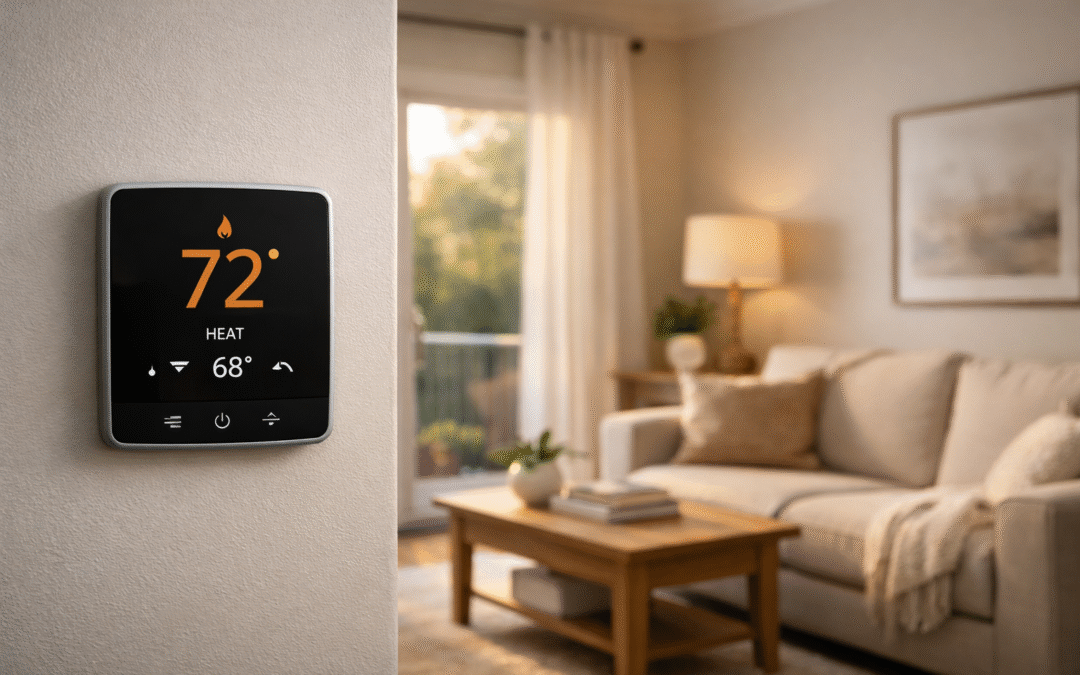
When winter temperatures dip into the 40s across Clearwater, Dunedin, and throughout Pinellas County, many homeowners find themselves asking the same simple question:
Is 72 degrees a good temperature to set my heat?
The honest answer is that 72 degrees can be perfectly fine in a Florida winter, but it isn’t a universal rule. The right setting depends on how Florida homes are built, the type of heating system you have, and how evenly your home holds and distributes heat.
Why Heating in Florida Works Differently
Heating a home in Florida is very different from heating a home up north. Most homes in Pinellas County are designed with cooling as the priority, not extended winter heating. That means lighter insulation, more open layouts, and systems designed to remove heat efficiently during long, hot summers.
Because of this, heating systems in Florida are typically used for shorter periods and in milder conditions. When cooler weather arrives, those differences can affect how comfortable your home feels, even if the thermostat setting seems reasonable.
Is 72 Degrees a Good Heat Setting?
For many Pinellas County homeowners, 72 degrees is a comfortable and reasonable place to start. If your home warms evenly, your system runs steadily, and your energy bills stay predictable, there’s usually no reason to change it.
However, some homeowners find that even at 72 degrees, certain rooms still feel chilly or that the system seems to run longer than expected. In those cases, the issue usually isn’t the number on the thermostat, it’s how the home and system are working together.
How Heat Pumps Perform During Cold Weather
Most homes in Clearwater, Dunedin, and surrounding areas rely on heat pumps rather than traditional furnaces. Heat pumps work differently by pulling heat from outdoor air and transferring it inside, even when it feels cold outdoors.
During colder Florida mornings, it’s normal for a heat pump to run longer or operate at a lower, steadier output. Unlike gas furnaces, heat pumps don’t blast hot air quickly. This can sometimes make homeowners think the system isn’t working properly when, in reality, it’s operating exactly as designed.
Making large temperature jumps on the thermostat, such as going from the high 60s to the mid-70s, can actually reduce efficiency and put unnecessary strain on the system.
Comfort Matters More Than the Exact Number
Instead of focusing on whether 72 degrees is “right,” it’s more helpful to pay attention to how your home actually feels.
If the temperature is consistent from room to room, the air feels comfortable, and your system cycles normally, your setting is likely fine. When homeowners experience uneven heating, cold bedrooms, or constant adjustments to the thermostat, those are signs that something else may need attention.
In many Pinellas County homes, airflow problems or duct issues play a major role in winter comfort.
Why Some Homes Feel Cold Even at 72 Degrees
When a home doesn’t feel comfortable at an otherwise reasonable setting, ductwork and airflow are often the culprit. Leaky ducts, restricted airflow, or systems designed primarily for cooling can prevent warm air from reaching all areas of the home evenly.
Thermostat accuracy can also be a factor. Older thermostats or poorly placed controls may not accurately reflect the true temperature in your living space, leading to discomfort even when the system is running correctly.
These are common issues in Florida homes and often go unnoticed until cooler weather highlights them.
Should You Adjust the Temperature at Night?
Many homeowners wonder whether they should lower the heat at night. In most Florida homes, a slight adjustment is fine, but drastic changes aren’t recommended.
Lowering the thermostat a few degrees overnight can improve comfort and efficiency, but turning the system off entirely during cold snaps often forces it to work harder in the morning. Gradual adjustments help heat pumps perform more efficiently and reduce wear on system components.
What Temperature Is Best for Efficiency?
For most homes in Clearwater and Dunedin, maintaining a steady temperature between the upper 60s and low 70s delivers a good balance of comfort and efficiency during winter months. Avoiding frequent manual changes and allowing the system to maintain a consistent setting typically produces better results than constant adjustments.
True efficiency, however, depends far more on system condition, airflow, and maintenance than on a single thermostat number.
Why Winter Is a Good Time for HVAC Maintenance
Winter is actually an ideal time to schedule HVAC service in Pinellas County. Heating systems that only run part of the year can develop small issues that go unnoticed until they affect comfort.
A professional inspection can help ensure your heat pump is operating efficiently, your airflow is balanced, and your system is prepared for the heavier workload that comes with spring and summer. Addressing minor issues now can prevent larger, more expensive problems later.
Learn more about our maintenance here.
Final Thoughts: Is 72 Degrees Right for You?
For many Florida homeowners, 72 degrees works well during winter. The key is how your home responds to that setting. If comfort is consistent and the system runs smoothly, you’re likely in a good range.
If you find yourself constantly adjusting the thermostat or dealing with uneven temperatures, the issue may have less to do with the setting and more to do with airflow, system performance, or maintenance.
A professional evaluation can often make a noticeable difference in comfort without major changes.Contact Carr AC today at 727-447-7212 to schedule your evaluation and enjoy consistent comfort all winter long!