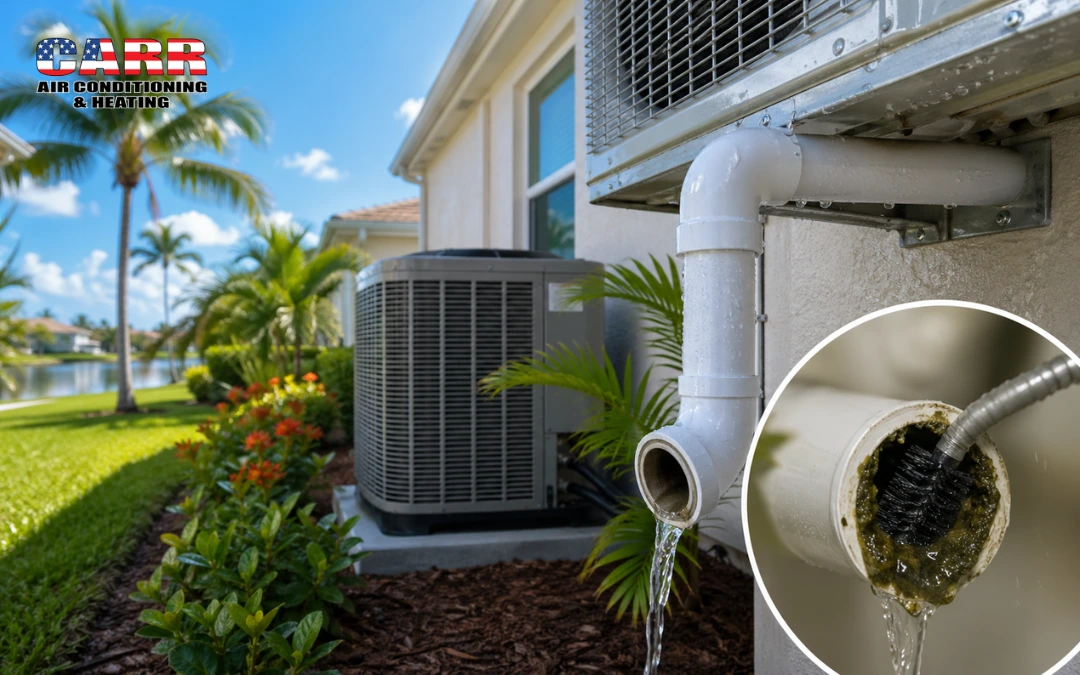
For homeowners in Clearwater, Dunedin, and throughout Pinellas County, AC drain line clogs are one of the most common — and frustrating — HVAC issues that show up once the weather starts warming up.
What makes this issue even more frustrating is that it often appears without warning — right when you need your AC the most. Most people don’t think about their drain line until something goes wrong. By the time water backs up, the system shuts off, or a musty smell appears, the clog has already formed.
Drain line clogs don’t happen randomly. They build up over time, and in Florida’s climate, they’re almost guaranteed without some level of prevention. That’s why learning how to prevent AC drain line clogs is essential to keeping your system running smoothly.
Why AC Drain Line Clogs Keep Coming Back
One of the biggest frustrations homeowners face is dealing with the same issue more than once. The drain line gets cleared, everything seems fine, and then a few months later the problem returns.
That happens because the conditions inside the drain line never really change. Your AC system constantly pulls moisture out of the air — especially in humid areas like Pinellas County. That moisture creates a damp environment inside the line, which naturally allows buildup to form again.
Even after a clog is removed, the same process starts all over unless something is done to prevent it.
What’s Actually Building Up Inside the Line
Drain lines don’t clog overnight. The buildup happens gradually as your system runs day after day.
As air moves through your system, small particles like dust and debris come with it. When that mixes with moisture, it creates residue that sticks to the inside of the line. Over time, that buildup thickens and begins to restrict water flow.
In many cases, this buildup eventually leads to a full AC drain line clog, especially in systems that run frequently in Florida’s climate.
Why Spring Is When Problems Start Showing Up
Many homeowners first notice drain line issues in spring — and there’s a reason for that.
As temperatures rise, your AC begins running more consistently. That means it’s pulling more humidity out of the air, increasing the amount of water moving through the drain line. If there’s already buildup inside, that extra moisture can push it to the point of blockage.
This is why systems that seemed fine during winter suddenly develop issues as cooling season begins.
Why Prevention Matters More Than Fixing the Problem
Once a drain line clogs, it usually leads to disruption. In many cases, the system shuts down to prevent water damage — leaving you without cooling when you need it most.
Fixing the clog solves the immediate problem, but it doesn’t stop it from happening again. Prevention is what keeps the system running consistently, especially during the months when you rely on it the most.
What Homeowners Can Do to Reduce the Risk
There are a few simple things homeowners can do to lower the chances of AC drain line clogs forming.
1. Keep your air filter clean. Dirty filters allow more debris into the system, which contributes to buildup inside the drain line.
2. Make sure vents aren’t blocked. Proper airflow reduces strain on the system and helps moisture drain correctly.
3. Watch for early warning signs. Musty smells, water near the air handler, or increased humidity can indicate early blockage.
Even well-maintained systems in Florida can still develop drain line issues over time. The environment alone makes it difficult to avoid completely without a more consistent preventative approach.
Why Professional Maintenance Makes a Difference
Routine HVAC maintenance is one of the most reliable ways to stay ahead of AC drain line clogs and prevent buildup before it leads to system issues.
During a service visit, a technician can inspect the line, clear early buildup, and ensure water is draining properly. Catching these issues early is much easier than dealing with a full blockage later.
For homeowners in Clearwater and Dunedin, this is especially important because of how often systems run throughout the year.
Taking a Long-Term Approach to Prevention
Because drain line clogs are tied to moisture and usage, preventing them long-term requires consistency.
Instead of waiting for problems to show up, many homeowners benefit from solutions that help keep the line clear over time while working alongside regular maintenance. This reduces the chance of repeat issues and helps the system operate more reliably.
Why This Matters for Your HVAC System
A clogged drain line might seem like a small issue, but it can have a bigger impact than most people realize.
When drainage is restricted, your system can’t remove moisture properly. That affects comfort, performance, and can trigger safety switches that shut the system down.
Keeping the drain line clear helps your entire HVAC system work the way it’s supposed to.
FAQs
Q1: What causes AC drain line clogs in Florida homes?
Ans: Florida’s humidity creates the perfect environment for algae, mold, dust, and debris to build up inside the drain line.
Q2: How can I prevent AC drain line clogs?
Ans: Regular HVAC maintenance, clean filters, and early detection help prevent buildup and keep the line clear.
Q3: What are the signs of a clogged AC drain line?
Ans: Water near the unit, musty odors, increased humidity, and unexpected system shutdowns.
Q4: How often should AC drain lines be cleaned?
Ans: At least once a year — ideally before spring cooling season.
The Bottom Line
In Florida homes, AC drain line clogs are extremely common — but they’re also highly preventable.
The key is understanding that buildup happens over time and taking steps early to reduce the chances of it becoming a problem. Waiting until the system shuts down often means dealing with an issue that could have been avoided.
For homeowners in Clearwater, Dunedin, and across Pinellas County, staying ahead of drain line issues is one of the simplest ways to keep your HVAC system running smoothly through the hottest months of the year.
If you want to prevent recurring drain line issues and avoid unexpected shutdowns, the team at Carr Air Conditioning can help you maintain your system and prevent costly HVAC problems before they start.
For additional information on moisture and HVAC performance, visit the U.S. Environmental Protection Agency: https://www.epa.gov/mold